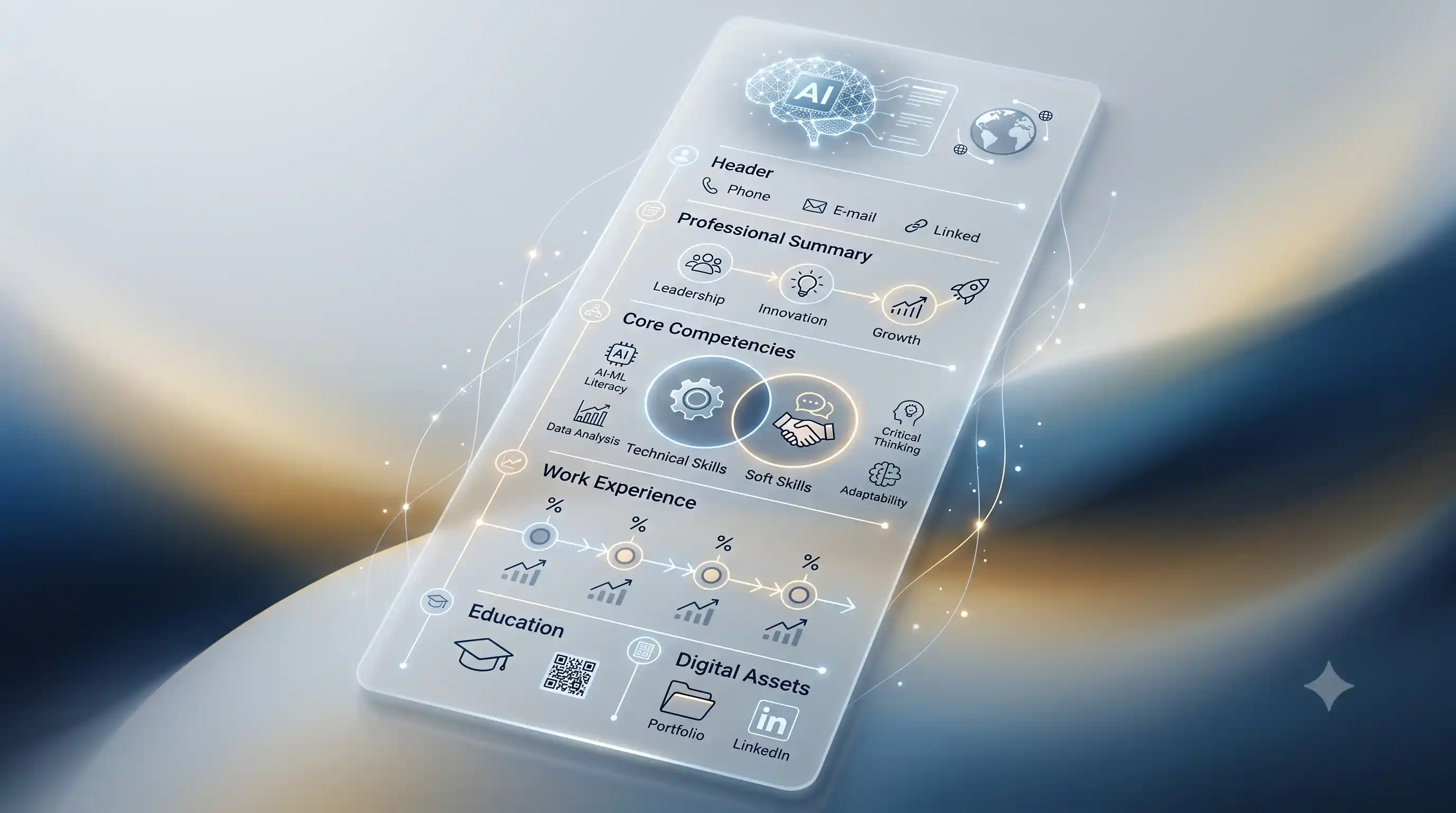
Optimizing your resume for AI and ATS (Applicant Tracking Systems) in 2026 involves navigating a landscape where technology and talent acquisition intersect more than ever before. As AI and ATS continue to evolve, understanding how these systems operate and how to tailor your resume accordingly is crucial for job seekers aiming to stand out in a crowded market. This guide provides actionable insights and strategies to help you optimize your resume effectively, ensuring it reaches human eyes and makes a positive impact.
Understanding AI and ATS in 2026
The Role of ATS in Hiring
By 2026, ATS have become a standard tool in the hiring arsenal of nearly all large companies, with about 97.8% of Fortune 500 companies using them. These systems are designed to manage the overwhelming number of applications and help recruiters find the most suitable candidates efficiently. However, the reliance on ATS also means that resumes are often filtered out before reaching human recruiters, primarily based on keyword matching and other algorithmic criteria.
AI's Influence on Resume Screening
AI technologies have been increasingly integrated into HR functions, with 39% of organizations in 2025 using AI in some capacity. AI systems enhance ATS by adding layers of semantic understanding, allowing these systems to evaluate resumes beyond simple keyword matching. This means that your resume needs to be not only ATS-compliant but also contextually rich and relevant.
The Shift to Semantic Search
One of the significant changes in 2026 is the shift from keyword-based parsing to semantic search. This transition allows ATS and AI systems to understand the context and relationships between different skills and experiences, rather than just looking for exact keyword matches. Systems like Workday's Skills Cloud exemplify this shift, mapping relationships between skills to better assess a candidate's capabilities.
Crafting an AI and ATS-Friendly Resume
Optimize for Semantic Understanding
To optimize your resume for semantic search: